Security & Low-Voltage Guides for Arizona Businesses
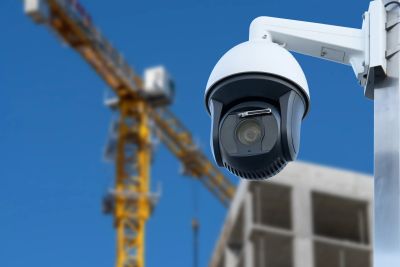
How to Prevent Copper and Equipment Theft on Arizona Construction Sites
The most effective way to stop copper and equipment theft on an Arizona construction site is layered, monitored protection: a solar-powered surveillance trailer with AI detection and live alerts, bright lighting, controlled entry points, and a clear chain of custody for high-value materials. Cameras that only record after the fact rarely stop a loss; cameras that detect and alert in real time do.
Why Arizona job sites are targeted: Copper wire, cable reels, tools, and heavy equipment are easy to resell, and open, unpowered sites are easy to reach at night. In March 2026 the Arizona Attorney General announced a five-year prison sentence for a man whose copper wire thefts from Tucson streetlights caused $46,582 in damage. ADOT has reported 72 wire theft incidents in fiscal year 2022-23, with losses and repair costs of about $144,000. Data center, utility, and commercial builds, where large amounts of copper sit on site, are especially exposed.
1. Monitor the site 24/7 without relying on site power. Most theft happens before permanent power and internet exist. Solar surveillance trailers run off-grid with battery backup and cellular connectivity, so protection starts the day you break ground.
2. Use AI detection and live alerts, not just recording. AI video analytics can tell a person or vehicle from wind, animals, or shadows, and send an alert or trigger lights and audio warnings while an intrusion is still happening.
3. Light and control the perimeter. Bright lighting, fencing, and a limited number of gated entry points make every camera more effective and give intruders fewer places to hide.
4. Protect high-value materials first. Store copper, cable reels, and tools in locked containers within camera view. Deliver copper as close to installation as possible, and log deliveries and usage.
5. Document everything. Time-stamped video and delivery records help police, insurers, and your own team respond quickly when something goes missing.
How Praevideo helps: Praevideo is a Phoenix-based, Arizona ROC C-67 licensed low-voltage contractor. We deploy solar surveillance trailers with AI detection on construction and data center job sites across Arizona, and when the building is ready, we install the permanent cameras, access control, cabling, and fiber. Call 602-426-4046 or email info@praevideo.com for a free site assessment.
Hiring a Low-Voltage Contractor in Arizona: What the ROC C-67 License Means
In Arizona, commercial low-voltage work, including security, alarm, video, intercom, and communication systems, should be performed by a contractor licensed by the Arizona Registrar of Contractors (ROC). For commercial projects, the classification to look for is C-67, Low Voltage Communication Systems. You can confirm any contractor's license yourself on the ROC website before you sign a contract.
What the C-67 license covers: The ROC issues low-voltage communication licenses in three versions: C-67 for commercial work, R-67 for residential work, and CR-67 for both. These classifications cover low-voltage systems such as alarm, sound, intercommunication, public address, television and video, and low-voltage signaling systems. For a business, that typically includes security camera systems, access control, and the structured cabling that connects them.
What it takes to earn one: According to the ROC's license classification requirements, a C-67 license requires at least two years of qualifying experience and passing both the Statutes and Rules Exam and a trade exam. Licensed contractors must also maintain a license bond and renew their license on a regular cycle.
Why it matters when you hire: Licensed contractors are regulated by the state, and customers have a formal complaint process through the ROC. The license requires documented experience and passing exams in the trade. Commercial projects, inspections, and general contractors often require a properly licensed low-voltage contractor.
How to verify a license in two minutes: Search the contractor's business name or license number on the Arizona Registrar of Contractors website (roc.az.gov). Confirm the license is active, the classification matches the work (C-67 or CR-67 for commercial low-voltage), and the business name matches your contract.
Questions to ask any low-voltage contractor: What is your ROC license number and classification? Are you insured, and can you provide a certificate of insurance? Are your crews OSHA trained? Will your own team do the work, or will it be subcontracted? Do you provide test results and documentation at turnover?
About Praevideo: Praevideo is a Phoenix-based commercial security integrator licensed by the Arizona ROC under the C-67 Low Voltage Communication Systems classification. We are insured, our crews are OSHA trained, and we install security cameras, access control, surveillance trailers, structured cabling, and fiber across Arizona. Call 602-426-4046 or email info@praevideo.com.
Choosing a Commercial Security Camera System in Phoenix: A 2026 Checklist
The right commercial security camera system for a Phoenix business is one designed around your specific risks, covers every entrance and high-value area, holds up to Arizona heat, and alerts you to problems in real time instead of only recording them. Start with an on-site assessment, then choose cameras, storage, and software that fit how your team will actually use the system.
1. Start with a site assessment, not a camera count. A good integrator walks your property and identifies entrances, parking areas, loading docks, cash points, and blind spots before recommending equipment. The goal is coverage of what matters, not the most cameras.
2. Plan for Arizona conditions. Outdoor cameras in the Valley face extreme summer heat, intense sun and glare, and monsoon dust and rain. Choose outdoor-rated cameras with the right operating temperature range and weather rating, and position them to avoid direct sun washing out the image.
3. Choose cloud, on-premises, or hybrid storage. Cloud-managed systems make remote viewing and multi-site management simple. On-premises recorders keep footage local. Hybrid systems combine both. The right answer depends on your bandwidth, retention needs, and how many locations you manage.
4. Look for AI video analytics. Modern systems can detect people and vehicles, filter out false alarms, and let you search hours of footage in seconds. AI alerts turn cameras from a record of what went wrong into a tool that helps prevent it.
5. Integrate with access control. When cameras and door access are connected, every badge swipe or door event can be tied to video, which makes investigations faster and accountability clearer.
6. Do not overlook the cabling. Reliable cameras depend on properly installed and tested low-voltage cabling and network infrastructure. Hire a contractor licensed by the Arizona ROC for low-voltage work (C-67 for commercial projects).
7. Ask about support after installation. Find out who you call when a camera goes offline, how firmware updates are handled, and whether the installer is local.
How Praevideo helps: Praevideo is a Phoenix-based, Arizona ROC C-67 licensed, vendor-agnostic security integrator. We design and install commercial camera systems with AI analytics, access control, and the cabling behind them, working with platforms such as Axis, Verkada, and Lumana. Call 602-426-4046 or email info@praevideo.com for a free on-site assessment.